The pilotage of drones has been largely democratised in recent years, whether for leisure (a amateur photographers, videographers) or for emerging professional uses. In the face of this boom, the European and national authorities have put in place a harmonised regulatory framework to ensure the safety of airspace and people on the ground. In 2021, common rules were introduced throughout the European Union via EASA (European Aviation Safety Agency), supplemented in France by specific rules defined by DGAC (Directorate General for Civil Aviation). This background guide, updated for 2025, explains in detail the legislation of drones in Europe and France, so that you inform, reassure and guide on your flights. We will discuss the categories of aircraft and operations (open, specific, certified), mandatory procedures to fly legally, permitted or prohibited flight areas, the obligationsregistration, insurance, training, and French specificities (AlphaTango platform, Geoportail, local restrictions). Concrete examples (DJI Mini 2, aerial shots) will illustrate these rules, and we will conclude with a box on the sanctions Infringements.
In summary:
The categories of drones and operations (European EASA framework)
European EASA regulations segment drone flights in three categories operations, depending on the level of risk: Open, Specific and certified . Each category imposes appropriate safety rules and limitations. The vast majority of users of recreational drones or even many beginners operate in the Category « Open », the most permissive but with restrictions. Categories « Specific » and « certified »concern more risky or advanced uses requiring specific authorisations. Here is an overview of these categories:
Open category: low-risk flights (A1, A2, A3)
The open category (Open category) consists of operations with the lowest level of risk, which can be carried out without prior individual authorisation. It is divided into three sub-categories : A1, A2 and A3 . These are mainly distinguished by the distance to be kept vis-à-vis persons not involved in the flight:
- Subcategory A1: « flight over persons » – It allows for overflight of people isolated (but never crowds or « meetings of people ») . This subcategory typically applies to light drones (class C0 or C1). For example, a small drone of less than 250 g such as the DJI Mini 2 falls under category A1 LimitedThis allows for the occasional overflight of people not involved (if possible avoiding) while respecting the absolute ban on flying over crowds. In practice, A1 is the ideal category for low-risk mini-drones operated in a reasonably populated area.
- Subcategory A2: « Flight close to people » – It allows to fly close to people non-participating, while maintaining a horizontal safety distance. The general rule requires that at least 30 metres distance which can be reduced to 5 metres if the drone has a slow speed mode activated. Direct overflight of people remains prohibited. This sub-category concerns Class C2 drones (less than 4 kg) and requires additional training for the telepilot (see section training). Medium-sized current drones (around 1 to 4 kg) can theoretically fly in A2 provided these distances are respected. However, in France in 2025, flying in A2 in urban area remains very difficult National regulations do not permit overflight of public space in urban areas (see below), effectively limiting the use of A2 in urban areas.
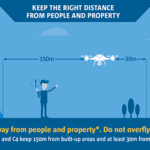
- Subcategory A3: « flight away from people » – It requires operation onlyat a good distance from anyoneand outside residential, commercial, industrial or recreational areas. In concrete terms, an A3 flight must take place in an isolated location, ensuring that no unincorporated person is in the immediate vicinity, and maintaining at least 150 metres of horizontal distance from built or frequented areas. This subcategory covers heavier drones (up to 25 kg, classes C3 and C4) and all drones without class marking placed on the market before 2024 and weighing more than 250 g. Indeed, since the end of the transition period on 1 January 2024, a drone without class indication and weighing between 250 g and 25 kg can only be operated in "limited" A3: it is necessary to fly away from people and away from inhabited areas. For example, an old model such as DJI Mavic Air 2 (~570 g, without an EC class) can now fly only in isolated areas (A3). Subcategory A3 represents the maximum precautionary level in open category, suitable for bulky appliances or operations in the countryside.
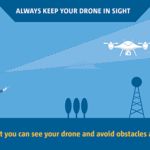
General rules in open category: Whatever subcategory (A1, A2 or A3), some basic principles apply systematically. The drone must evolve in direct view of the telepilot (VLOS), except for the use of a double-command observer in the event of an immersion flight (FPV). The maximum flight height is 120 meters in relation to the ground , except in exceptional cases. It is prohibited from flying over gatherings of persons (fouls, public events) in all circumstances. Moreover, you cannot drop no object or substance Since the drone in full flight (no projectile release, water, etc.), unless specific authorization in certified category or particular scenario. Finally, a recreational drone must not carry dangerous goods. By respecting these limits, most leisure flights (air photography, tourist shots, etc.) and even many simple commercial services (surfing land, real estate, nature) can take place within the open category.
Specific Category: Moderate Risk Scenarios (Special Flights)
As soon as you leave the open category (e.g. to fly at night, in populated areas, beyond the direct view, or with heavier drones), you switch into the category "specific". This category refers to transactions with moderate risk, usually of a vocation professional (technical inspection, urban photography, precision farming, etc.) To operate there, it is no longer enough to follow the predefined rules: you must obtain a prior authorisation of the aeronautical authority on the basis of a risk analysis. In practice, the telepilot or operator must carry out a safety study (SORA) detailing the proposed flight scenario and risk mitigation measures, or complying with a Standard Scenario (STS) pre-approved by EASA.
In 2025, France is in the midst of a transition between its former National scenarios (S1, S2, S3, S4) and new European Standard Scenarios (STS-01, STS-02). During the transitional period 2024-2025, it is still possible for operators who wish to fly according to the previous French scenarios (with prior declarations in prefecture via AlphaTango, protocol with local authorities, etc.), if their certifications were obtained before 2023. For example, the French S3 scenario allowed overflight in agglomeration under strict conditions (height < 150 m, secure area, possibly parachute) – allowing professionals declared before 2023 to continue shooting in the city until 2025. From 2026However , all flights will have to comply fully with the European framework . National scenarios will then disappear in favour of STS and case-by-case authorisations issued by DGAC.
In practical terms, to operate in a specific category, a telepilot professional must have more skills than in the open category. It is necessary to obtain a Certificate of theoretical aptitude for telepilot (CATT), equivalent to an aeronautical theoretical licence, usually by passing an examination in DGAC centre . One practical training validated in training centre is also required. The operator shall then either comply with a Standard scenario (e.g. STS-01 for direct sight flights in low-altitude urban areas, or STS-02 for direct sight flights in sparsely populated areas), or submit a application file specific for the proposed operation. In France, these approaches go through the AlphaTango platform (see below). The specific category therefore offers a framework more flexible but more demanding, reserved for operations that exceed the limits of the open category (e.g. filming an event in the city of night requires a specific authorization).
Certified Category: High Risk and Industrial Uses
The certified category concerns the most risky drone operations, similar to conventional civil aviation. For example, transport of persons or dangerous goods by drone, very large aircraft or autonomous flights over dense crowds. This category implies a full certification the drone (type certification), the operator and possibly the telepilot, similar to the requirements for a manned aeroplane. It is for the moment very little applied in Europe to civil drones, as most common uses do not reach this level of risk. A future example could be the autonomous flying taxis or delivery drones in dense urban areas: they would fall within the certified category. For the general public and traditional shooting professionals, this category is not relevant. Simply remember that it exists at the end of the chain for operations critical, and requires heavy procedures (airworthiness certificates, inspections, certified professional pilots, etc.). The majority of the rules set out in this article will therefore concern the open and specific categories, which cover 99% of civil drone use in 2025.

Registration of pilots and drones: administrative procedures (AlphaTango)
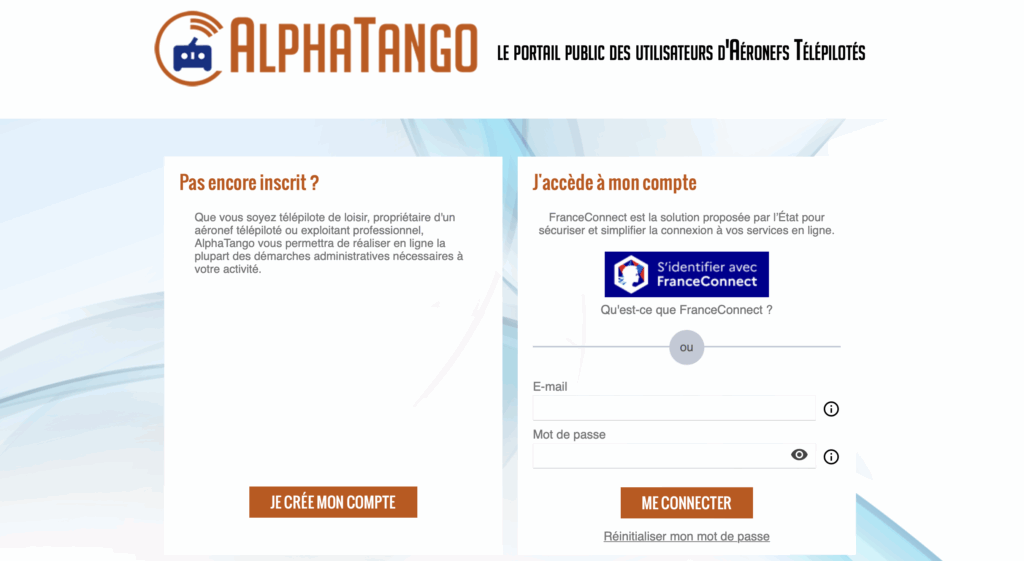
Whether you are leisure or professional, some administrative procedures are before flying a drone, to ensure traceability and accountability of telepilots. In Europe, regulation imposes theregistration of drone operators (owners/pilots) when a drone exceeds a certain weight or is equipped with a camera sensor. In France, this recording – as well as the possible recording of some drones themselves – is done via the online platform AlphaTango, managed by DGAC. Let's take stock of these obligations.
UAS operator registration (pilot) – obtaining the number
FRA
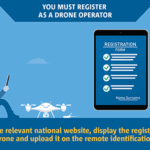
The first step to legally fly is you register as UAS operator (Unmanned Aircraft System) to the authorities. Any drone pilot over 250 g must register online with DGAC . Similarly, if your drone weighs less than 250 g but is equipped with a camera, registration is also mandatory . These criteria cover almost all modern recreational drones (even a 249 g mini-drone with camera must be registered, despite its low weight). Registration takes place on the official portal AlphaTango (alphatango.aviation-civile.gouv.fr). At the end of the procedure, a Operator number is assigned to you in the form FRAxxxxxxxxxxxxxxxxx (FRA + 13 characters) . This unique number identifies as owner/pilot and must be affixed to each of your drones that you will fly. In France, regulations require that the number be labelled on the drone legible when grounded . In practice, many users print a small label or write FRA code to the indelible marker in a visible place (e.g. under the battery or on the carling).
Note: the term UAS operator does not necessarily indicate a commercial activity – it applies to any user, whether it flies for leisure or work. Only one FRA number is issued per operator, and it covers all the drones you use. This number is mainly used by law enforcement officials: in the event of an incident, it allows to trace to the owner of the drone to take responsibility.
Registration of drones over 800 g – UAS-FR number
and electronic reporting
In addition to recording the pilot, France maintains Individual recording of the heavy drones. If your drone weighs more than 800 grams, you must not only have an AlphaTango account (as FRA operator), but also record each drone Exceeding 800 g on this platform . Once the drone is declared, a identification number UAS-EN-xxxxxx it is attributed, which you must label on the device (in addition to the operator's FRA number) . This dual identification (pilot number + drone number) is a French specificity aimed at tracing drones of large mass. For example, a professional drone type DJI Inspire 2 (~3 kg) will have a FRA label... (pilot) and a UAS-FR label... (drone) glued to the structure.
In parallel, since 2019 France requires that any drone of more than 800 g be equipped with a Remote electronic reporting . This electronic alert, sometimes referred to as "electronic beacon", allows the drone to transmit continuously the operator's identification ( FRA number) and its position, captured by the nearby law enforcement agencies. Some recent drones natively integrate this function into their firmware: it is enough to activate via the manufacturer's application (DJI for example has deployed firmware updates to comply with this requirement). For older drones or unmanned drones, add one external beacon approved (accessory to be fixed on the drone) . Several beacon models exist on the French market to comply with this obligation. Failure to comply with the electronic report >800 g is punishable, and above all it would make your flight illegal in France.
Finally, remember that any change in a drone >800 g shall be notified : in case of sale, loss, theft or destruction of the device, you must delete the corresponding record in AlphaTango . This prevents a drone you no longer own from remaining linked to your operator profile (and therefore your responsibility). Even drones for indoor use only must be registered if they exceed 800 g – although the regulations do not apply to indoor flights, the administrative obligation to register remains in France. On the other hand, for an indoor drone, online training and electronic reporting are not necessary (only administrative registration).
In summary, for registration formalities:
- All drone pilots >250 g or with camera sign up on AlphaTango and get a number FRA .
- All individual drones >800 g must be registered and marked with a UAS-EN code, and equipped with electronic beacon .
- Remember to keep your recordings up to date (addition of a new device, removal of a transferred device).
- These steps are free and relatively simple online. They aim to empower the telepilot and enable the owner of the drone to be identified in case of accident or infringement.
EC marking of drones (classes C0 to C4)
In parallel with the administrative registration, Europe introduced a technical classification of drones by CE classes (C0, C1, C2, C3, C4), associated with the open category. These classes are determined by the take-off weights and safety equipment Drone. For example, the class C0 correspond aux drones de <250 g sans caméra “complexe” (souvent des drones-jouets), la classe C1 aux drones <900 g disposant de fonctions comme l’identification à distance, la classe C2 aux drones <4 kg avec mode vitesse lente, etc. . À chaque classe sont rattachées des conditions of use in open subcategory. Since 1 January 2024, any new drone sold in Europe must be CE marked with its class number to benefit fully from the provisions of the open category . In practice, this means that new models launched on the market have a C0, C1, C2 logo on their compliance label.
If your drone has a class marking, it will be easier to know which subcategory of flight is authorized The instructions for use will indicate, for example, "this C1 drone can fly in A1 (surfing of authorized isolated persons) if the pilot has the required training". A contrario, an ancient drone without marking is considered as a "drone legacy". Since 2024, unclassed drones placed on the market have had to comply with the constraints of A3 if they weigh >250 g. The transitional period 2021-2023 for the use of certain drones not classified in A2 or A1 is now over. Thus, it is strongly advised, if you buy a new drone in 2025, to check that it has the CE class marking and the manufacturer 's EU declaration of conformity . Lists of drones certified by class are published by EASA. Among the popular drones, for example, the DJI Mavic 3 Classic who obtained the class C1 (with an updated firmware) and has the C1 logo on its chassis. This marking allows him to fly in category A1 (surfing of isolated people possible), which was forbidden to previous versions without class.
In summary: Class marking is an industrial constraint that facilitates the life of the telepilot by clearly specifying the Authorized flight domain of his drone. By 2025, more and more models were available, but older devices remained usable, subject to the limitations (often A3) imposed on them by the absence of a class.
Telepilot training: certificates and certificates required
Flying a drone legally does not improvise: beyond administrative registration, it is imperative (in most cases) to receive training and a certificate of competence. The objective is to ensure that each pilot knows the safety rules and how to operate his drone responsibly. Requirements vary according to the category of flight and the weight of the aircraft. Let's take stock of the compulsory training in 2025 to fly a drone, as well as on any Advanced certifications for professionals.
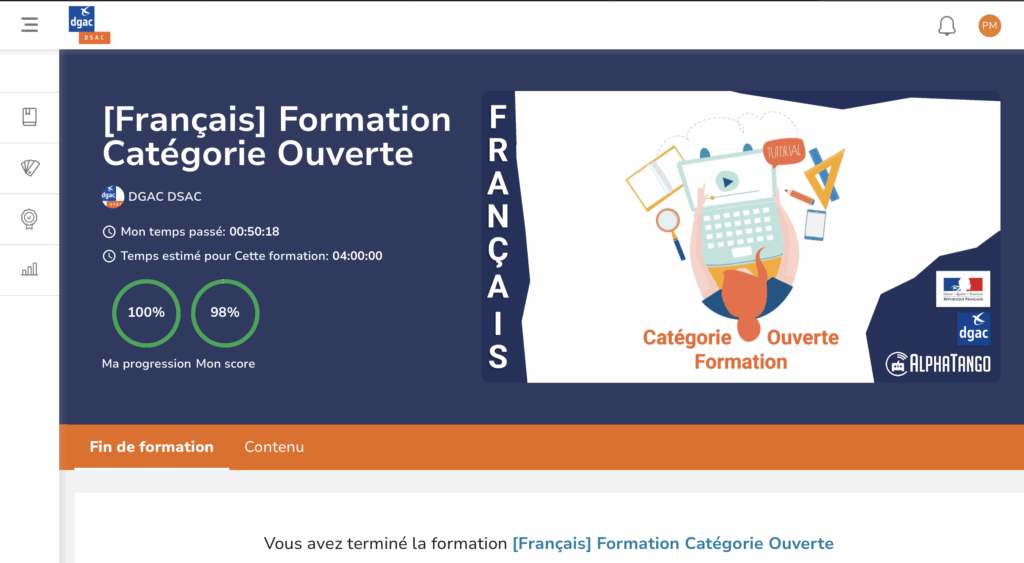
Online training A1/A3 – Open AUS pilot certificate
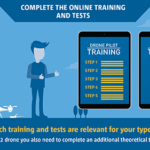
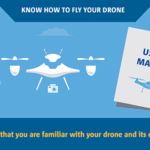
For all flights in open categoryThe EASA requires basic training for drone telepilots as soon as the aircraft exceeds 250 g. Thus, if your drone weighs 250 g or more, you must attend online training « Open Category A1/A3 » then pass the associated test. In France, this free training is available on the AlphaTango portal in the form of online modules, followed by a MCQ of 40 questions . The test is passed from 75% good answers (so you are entitled to 10 errors max) and attempts are unlimited until you get the required score. Once the examination has passed, a A1/A3 follow-up training certificate you are delivered (downloadable on AlphaTango). This certificate shall be valid 5 years and must be renewed by re-testing at expiry . It proves that you know the basic rules for using a drone in Europe.
If your drone weighs less than 250 g, formation is not mandatory – this is typically the case for a DJI Mini 2 or Mini 3 ( However, it is strongly recommended to follow it despite all the, as it covers the necessary regulatory bases . In a few hours you will learn for example safety distances, concepts of airspace, emergency procedures, etc. In addition, although the law does not impose it, a screening officer might see with a good eye the fact that you still have the A1/A3 certificate even with a mini-drone.
Note: flying without the required certification A1/A3 (while your drone >250 g l standard fine of 450 € in France . In the event of a check, if you have the certificate but are unable to present it immediately (forget it printed or saved on your smartphone), the fine is lighter (38 €) . It is therefore better to pass the training as soon as necessary, and have the certificate accessible on your flights.
A2 Supplementary Training – Flight Certificate Near People
If you want to exploit the full potential of the Sub-category A2 (theft) near 30 m / 5 m distance, with drones up to 4 kg), additional training is required. In addition to the A1/A3 certificate, EASA provided for a certificate of competence « A2 » who obtain by passing a further theoretical examination baptized "OPEN A2" . In France, this examination is not available on-line without supervision: it is necessary to pass it either in DGAC examination centre (in a local DSAC) or via an approved online platform with remote monitoring. The test also includes about 40 more advanced questions (meteo, flight performance, distance assessment, etc.). In addition, the candidate must attest to a practical self-training prior (a few supervised flights to become familiar with his drone). Once all is validated, you get the Certificate of pilot fitness near persons (Cat. A2), also valid for 5 years .
Thanks to the A2 certificate, a telepilot can operate a C2-class drone under more flexible conditions than in A3: it is allowed to approach people (30 m, or even 5 m in slow mode) and to fly in an area until then prohibited in A3 (e.g. above a private lot in a village). Beware however : in France, to date, flight in urban area (agglomeration) remains prohibited in open category regardless of subcategory (even with a certificate A2) . For example, A2 serves mainly in populated areas but not public For example, conducting a roof inspection in a private property in the city could be done in A2 (owner's agreement, respected distances), where in A3 this would be excluded. In any case, the addition of this A2 skill is an asset for telepilots wishing to push the limits of leisure flight a little, or for professionals who need additional flexibility in some missions.
Professional certification (CATT, practical training) – for the specific category
For use advanced professionals, particularly in specific categories, training A1/A3 (or even A2) is not sufficient. It is necessary to obtain a Certificate of Aptitude Theoretical Telepilot (CATT), which is a high-level theoretical examination supervised by the DGAC . The CATT test is comparable to a theoretical examination of a pilot of ULM or light aircraft, covering in depth air regulations, weather, navigation, human factors, etc. It takes place in a DGAC centre (in computerised QCM format) and its success proves that the candidate has the general knowledge to operate a drone in a specific scenario. In addition, practical training in approved centre is compulsory, subject to a certificate of completion of practical training issued by the organisation. Historically, in France, these requirements were part of the Telepilot licence for S1/S3 scenarios.
In 2025, during the transition, those who had already passed their CATT before 2023 benefited from temporary equivalences (e.g. conversion into a "teaching certificate") valid until 2025. But eventually, all new operators wishing to fly in specific scenarios must go through the theoretical examination box CATT then practical training. It should be noted that European Standard Scenarios (TSSs) may also have specific practical training requirements. For example, STS-01 (vol VLOS in urban areas) and STS-02 (vol BVLOS in sparsely populated areas) define required skills, and EASA has planned a new Drone Pilot Patent (BAPD) to align these competences at European level .
For the general amateur public and even professionals limiting their flights to open category conditions, it is not necessary to obtain the CATT. However, as soon as your business requires applications in prefecture or to work in risk areas, invest in this Advanced training becomes indispensable.
Obligations to carry documents in flight
Once trained and registered, remember your obligations Documentaries. On each flight, the telepilot must be able to present to law enforcement its training vouchers (certificate A1/A3, certificate A2 if applicable, etc.) and proof of registration (operator number, possibly copy of drone registration certificate >800 g). It is recommended to keep these documents on his smartphone or in paper version in his bag, so that they can be shown immediately in case of control. An identity document is also required. Failure to comply with this rule may result in fines (see sanctions section). It's about proving in the field that you're a trained and licensed pilot. Think about it before taking off: control can occur at any time, especially if you fly to a busy place.
Permitted and Prohibited Flight Areas: Where can a drone be flown?
Even a registered telepilot, trained and equipped with a compliant drone must constantly ask himself: Do I have the right to fly to where I am? The regulation of flight areas is a crucial aspect, as many spaces are subject to restrictions to protect public safety, privacy or air traffic. Here are the main lines to know where it is permitted or prohibited to fly its drone in France, and how to check it easily.
Tools to know flight zones (UAS Geoportal)
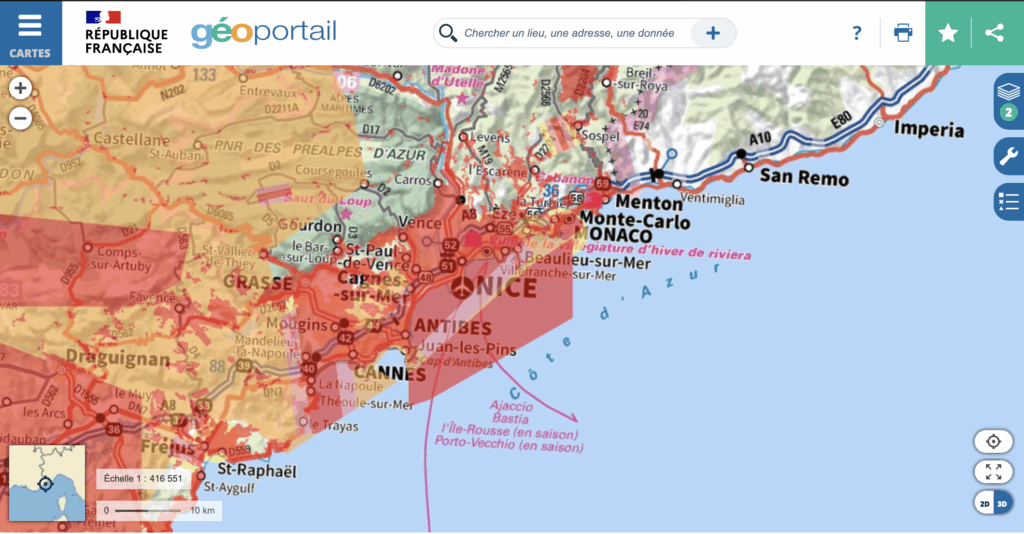
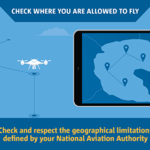
France has set up a Official interactive map identifying all areas where the flight of recreational drones (open category) is restricted or prohibited. This map is available online on the Geoportail , via the layer entitled « UAS restrictions open category and aeromodelism ». By accessing it, you can view in color the stress areas:
- Red zones : theft prohibited (ex: immediate proximity to airports, nuclear power plants, military bases, prisons...).
- Yellow/orange areas Authorized flight with maximum altitude restricted (e.g. 50 m or 60 m instead of 120 m, often near sensitive sites or small aerodromes).
- Purple areas : areas prohibited on certain days/times or subject to special conditions (temporary military activities, reserved airspace).
The absence of colouring on the map means in principle that the flight is allowed up to 120 m (standard height). Geoportail lets you enter an address or use geolocation to instantly know the location of the location you want to fly. It is therefore an indispensable reflex before each flight: see the map of drone zones to avoid committing an involuntary offence.
In addition to the official map, several mobile applications dedicated to drones offer a more user-friendly interface or additional features: for example Drone-Spot, Mach7Drone, Drone Keeper, GeoDrone, etc. These applications usually use the same official data (SIA and Geoportail) but add practical information (authorized spots suggested by the community, local weather, etc.). The important thing remains to always check the presence of Prohibited areas near your flight site, because flying over a red area by ignorance is not an acceptable excuse.
Main areas prohibited or restricted
In general, drones cannot overfly all matters of State security or sensitive areas. These include: No overflight (unless otherwise authorized):
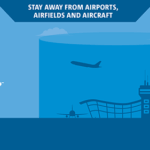
- The surroundings of airports and aerodromes : rays of several kilometers around the slopes are no-fly zones. For example, around large airports, a drone cannot fly within a radius of ~5 km (red zone) then with limited ceiling (orange zone) well beyond .
- The sensitive or protected sites : nuclear power plants, SEVESO industrial sites, Military bases, Ministry of Defence facilities, prisons, sensitive historical monuments, nature reserves and national parks, wildlife protection zones (zones biotope) ... Most of these sites appear in red on the Geoportail map. The law (Transport Code L.6214-4, L.6224-1) severely punishes the illegal overflight of these places.
- The cities and densely populated areas: this point is very specific to France (see next section). Currently, flying in drones above public space in city is prohibited by national decree, even if the area is not marked in red on the map (which may cause confusion). We detail this case separately below.
Apart from these prohibitions, there are also temporary or local restrictions. For example, when major events (fire fireworks of 14 July, sports events, official visits), Temporary arrests (ZRT)may prohibit the theft of drones over a specified area and duration. These ZRTs are published via the Aviation Information Service (AIS) and relayed on the Geoportail map when possible. If you fly in the coastal zone, also know that the flight over the sea remains regulated near the coast (territorial waters) as above the land – there is no need to think of being free to fly over a crowded beach on the pretext of being above the water.
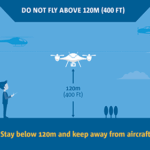
Flight Altitude: as mentioned, the maximum height without authorisation is 120 metres soil. This limit applies everywhere in uncontrolled space. In some permitted areas (yellow on the map), the limit is even lower (50 m or 60 m). Respecting these altitudes is imperative to avoid conflicts with manned aviation (emergency helicopters, tourist aircraft, etc.). Note that there are special cases in mountainous or steep terrain: the 120 m rule is measured from the point closest to the Earth's surface, which means you can follow the relief by keeping the drone 120 m above the local ground, even if you exceed 120 m above your take-off point. On the other hand, if your drone is electronically clamped at 120 m from the take-off point (some C1 drones impose), you may be limited in ascending terrain.
Specific rules in France: city, night, etc.
France, through its decrees of October 2019 (applicable since 2020), introduced additional national restrictions of which every pilot must be aware:
- Prohibition of flights in urban areas (public space) : It is forbidden in open category to fly a drone above public space in urban areas, whatever the class or weight of the apparatus. Lpublic space includes streets, roads, squares, public parks, urban beaches, etc. and more widely any place open to the public. In other words, even if your drone is very light and theoretically allowed in A1 above people, you do not have the right to take off in a street or municipal park without permission. This constraint goes beyond EASA rules (which would allow for A1 flight in a residential area under conditions) – it is a French precaution to avoid nuisances and risks in the city. Consequence: to fly in the agglomeration legally, you must do so on private land with the agreement of the owner (private space is not affected by the ban, as long as you remain above this land) or then enter a specific professional framework (S3 or STS scenario with prefectural authorization). For example, a real estate photographer can fly in the private garden of a house in the city with the consent of the owner (private space), but he will not be able to take off his drone from the street to photograph the nearby house.
- Prohibition of night flights in open category: In France, a recreational or professional drone in an open category must be operated Day only . The concept of day is defined as the period beginning 30 minutes before sunrise and ending 30 minutes after sunset. Beyond that, night flight requires a specific authorization in specific category (and generally visible lighting port at 150 m). Some EU countries allow open night flights with drones equipped with lights, but France has for the moment maintained the general ban. So no late evening flights or dawn without further steps.
- Immersion Flight (IPF) : Immersion flight with FPV helmet is allowed in open category only if an observer direct view is present alongside the telepilot . The pilot in FPV glasses is responsible for the open-scenario flight, but must be able to regain control at any time via the observer. In the national specific scenario (e.g. drone flights racer in registered competition), the old regulations provided that The observer becomes responsible flight . In practice, keep in mind that for leisure use, do not fly alone in FPV without spotting next to you to keep an eye on the drone.
- Drones > 900 g in low-altitude military areas (VOLTAC, SETBA) : France has established that if a drone of more than 0.9 kg flies in certain low-altitude areas used by the army (called VOLTAC or SETBA), it must Prior notification of the Ministry of Armed Forces via a specific form on AlphaTango . These areas are rare and involve military flights at very low altitude in training. They are marked on aeronautical maps. Most amateurs will never have to deal with this case, but it is a legal obligation for large drones in these sectors.
Air shooting: what is permitted or prohibited
A great attraction of drones is the photo/video. In this respect, the regulation has recently been reduced in France. Until 2022, report to DGAC any aerial shooting (photo/video classic) and get a prefectural authorization for infra-red shooting (thermal camera) These formalities were abandoned since 1 January 2023 . Now you no longer have a specific statement to make to film or photograph in drone as long as you respect the rules of overflight and privacy. This greatly simplifies the lives of videographers.
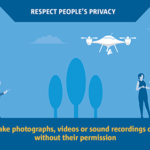
However, attention to the right to image and privacy : filming private individuals or properties from a drone can incur your criminal liability if this violates privacy. For example, broadcasting a video of an identifiable person without his consent may constitute an offence (article 226-1 of the Criminal Code). Sanctions may range up to 1 year in prison and 45,000 € fine in case of violation of privacy by capturing images or sounds without consent. It is therefore imperative, even as an amateur, to respect the privacy of others - Avoid filming people too closely in their garden, do not fly over low altitude properties without agreement, and blur faces/plates if you publish videos.
Differences between leisure and professional use
Until 2020, France clearly distinguished the practice leisure activities (aeromodelism) and practice professional(special activities) drones, with separate rules. European legislation has put an end to this distinction by laying down risk-based categories and no longer on use. From now on, a commercial flight and a leisure flight are subject to the same constraints when they present the same level of risk (a wedding photographer flying 30 m away in rural areas, for example, will use the A2 open category, just as an amateur might do). There are no longer fundamental regulatory differences between a leisure telepilot and a professional in 2025, except for the latter's need to respect labour law and commercial obligations (insurance, billing, etc.) in addition.
That said, in practicesome differences remain:
- Insurance : if insurance is not legally compulsory for an individual in an open category (except for drones over 20 kg where it is imposed by a European regulation), it is highly recommended to have a civil liability guarantee covering the use of drones. Most home multi-risk insurance can include this option upon request. For professional use, the subscription of a specific RC drone insurance is in reality indispensable Not only does it protect you from damage to third parties, it is often required by customers or authorities to issue authorizations. In addition, engaging in a business activity without insurance would be taking a huge financial risk, as the pilot is responsible for damage caused by his drone . It should be noted that in France, the law in any case imposes insurance for aircraft of more than 20 kg, whether pro or not, but most pro drones are below this weight.
- Administrative obligations : an amateur flying in the open category only has to register and train as seen above. A professional, if he wishes to go beyond (flights in populated areas, specific missions), will have to mount authorisation files in specific categories. Daily, making commercial services in accordance with the rules of the open category is quite possible (many paid shots are made in a standard A2 or A3 frame). However, as soon as a customer requests a service in a city or in a risky context, the operator must take additional steps (prefectural authorisation, coordination with local authorities, etc.). One leisure does not have access to these specific diets (it is not supposed to fly in town at all), while a pro can do so by complying with regulated scenarios.
- Legal status : flying for pleasure does not imply a legal structure, whereas to charge for shooting services, you have to start a business or be self-employed declared. This is not a matter of aviation regulation itself, but it is a different framework. One professional must take into account fiscal, accounting, etc., in addition to drone regulations. In addition, a professional would be in the best interests of maintaining a operating documentation (Operating Manual, Emergency Procedures, etc.), which was mandatory under the former S1-S3 scenario and remains specific.
In short, the leisure/pro border is more blurred than before. Flight conditions determine the applicable rules, not making money or not. However, serious professional use will in fact lead to more responsibilities: mandatory insurance, customer expectations, and often need to move to the specific category to carry out certain missions legally. It is reassuring to know that many simple commercial activities (photography of real estate outside agglo, followed by construction in rural areas, etc.) can be carried out within the framework Open without complex formalities – provided that the limits of this category are strictly respected and that they are up to date (registration, training). In case of doubt about a borderline flight (e.g. in a peri-urban area), it is best to consult with the DGAC or an aviation advisor to avoid inadvertent requalification of a pro flight as an offence.
Box: Penalties for infringements
Despite all the precautions, it is important to know the risks if the drone regulation is breached – even if only to measure the responsibility of the telepilot. In France, sanctions may be imposed on very heavy even for an individual:
- Non-compliance with safety or overflight rules (e.g. restricted area flight, altitude exceeded, city flight without authorization): you are on 1 to 6 months imprisonment and 15,000 € 75 000 € fine, and the confiscation of the drone Possible. For example, several media cases have seen pilots sanctioned for overflights of sensitive sites (military bases, airports) or of city centres in the red zone: fines imposed amount to EUR thousands and include the seizure of equipment.
- Harmful Others : if the illegal overflight takes place in aggravating circumstances (e.g. around an airport, causing a proven hindrance to air traffic, or during a public event), the penalties may rise to 1 year in prison and 45,000 € fine According to the Transport Code and the Penal Code. The judge may also order prohibition on piloting in the future.
- Violation of privacy : as mentioned above, capturing or disseminating the image of a person without his consent may be 1 year imprisonment and 45,000 € fine , regardless of air rules. It is a separate part (respect for privacy) but concerns many users of drone cameras.
- Administrative offences They impose more modest but not to be ignored fines. Stealing without registration or having completed the required training may be punishable by 4th class violation (up to 750) €), typically 135 € or 450 € flat rate . Not presenting his papers during a check is a first class violation (~11 € 38 €). These are lower amounts, but are added in case of unfavourable checks.
In conclusion, No one is supposed to ignore the law : the authorities (air transport gendarmerie, police) are beginning to be well trained on drone regulations and no longer hesitate to verbalise abuses, especially as the technical means of detection (anti-drone radars, electronic reporting) are reinforced. The best way to avoid trouble is to scrupulously comply with the rules in this guide, and to show common sense. The vast majority of recreational pilots will never have a problem if they fly carefully in authorized areas, respecting safety and others.
Need a professional drone pilot for your projects in the Mediterranean?
Based on the French Riviera, I offer my services of professional drone pilot certified, in full compliance with the European and French regulations detailed above. My activity, presented in detail on PierreGMartin.fr, addresses individuals and professionals seeking careful aerial shots and secure.
- Photography and video for yachting : I make fluid and immersive captures to enhance the lines of your yacht at sea or dock, ideal for brochures, websites or social networks of brokers and owners.
- Development of villas and prestigious properties : by harmonious aerial plans, j
- Roof inspection and site monitoring - quick intervention to document the state of a roof, monitor work or facilitate technical expertise, thanks to accurate and high resolution capture.
Each mission is prepared with seriousness, including authorizations, to ensure professional results in accordance with the regulations. For any request or personalized quote, do not hesitate to contact me directly via the site.
Useful official sources
- EASA (European Aviation Safety Agency) – Portal drones (European regulation): easa.europa.eu/drones
- DGAC France – Official information on the regulation of drones (leisure and professional): ecology.gouv.fr/drones-leisure-professional
- AlphaTango – User and drone registration portal, online examinations A1/A3, authorisation applications: alphatango.aviation-civile.gouv.fr
- Geoportail – Map of flight zones in France : geoportail.gouv.fr – UAS restrictions leisure
- Public Service – Practice sheet « Drone: Pilotage rules to be respected » (summary for individuals): service-public.fr...Drone pilotage rules
- Official texts – Regulation (EU) 2019/947 and 2019/945 (based on European regulations), Decrees of 3 December 2020 on drones in France, Transport Code (L.6214-4, L.6224-1) and Penal Code (art.226-1) on sanctions.