Introduction: what is street photography? Origins and interest
The street photography (or street photography) is the art of capturing spontaneous scenes of everyday life in public space, usually with a human presence in the center of the image. This genre was born almost at the same time as the invention of photography: the very first photo of Nicéphore Niépce in 1826 already showed a street, and since the 1890s Eugene Atget was walking Paris to document his streets in transformation. But the grammar of the street photo as we know it today has really been posed by Henri Cartier-Bresson and its concept of « decisive moment » in the 1950s. It is a matter of grasping in a fraction of a second significant moment of a scene, where composition, emotion and history converge in a strong image.
Beyond the simple technique, street photography carries a human and social interest Major. It allows us to witness daily life, to freeze anodizing or exceptional moments that tell the times and the experiences of ordinary people. Humanist photographer Sabine Weiss confided, for example, that after decades of various reports, « what's left is only pictures I took for myself, at the rescue » – proof that the stolen moments of everyday life have a particular magic. To practice street photography is to learn to See the world differently : we discover subjects everywhere, even at the foot of his door, we experience unexpected encounters, we leave his comfort zone and we develop his empathy . It is a school of life that requires being responsive, listening to its environment and constantly adapting – useful skills far beyond photography. In short, street photography is at the crossroads of documentary and artistic, with the ambition to show the reality of the street « as it is », capturing the soul of the city and its inhabitants in sincere and speaking images.
In summary:
The great street photographers since 1950
The street photo was marked by major international figures who defined gender from the 1950s onwards. Among the pioneers, Henri Cartier-Bresson is often mentioned, but also American photographers like Walker Evans – considered one of the initiators of the genre – or Robert Frank, including the book Americans (1958) revolutionized the outlook on post-war American society. In the 1960s and 1970s a real street photography school emerged in the United States, led by talents like Garry Winogrand, Lee Friedlander or Joel Meyerowitz, who walk around New York with their Leica or Canon 35mm. Their images, often taken on the alive in the big corner, show the exhilarating urban life of the time – scenes full of energy, chance and sometimes humor. New York photographer Garry Winogrand, for example, exposed a raw look at the crowd and passers-by, accumulating thousands of photographs taken in the street (he left behind him more than 250,000 undrawn negatives at his death, testimony to his obsession with photographing everything). At the same time, Europeans like William Klein (in Paris then New York) or British Tony Ray-Jones At the turn of the 60s/70s brought a new look, playing on urban graphics and a sometimes satirical approach to society. More provocative, New Yorker Bruce Gilden later became known for his flashy style in the face on the streets of Manhattan, shaking the conventions with uncompromising portraits.
Among the notable figures, we should also mention the mysterious Vivian Maier. This French American nurse, active from the 1950s to the 1990s, has photographed the streets of Chicago and New York in secret for decades. His work – more than 150,000 clichés – remained totally unknown during his lifetime and was discovered only after his death in 2009, generating immense posthumous admiration. The images of Vivian Maier, often in black and white, show with great sensitivity the urban life, the children, the street scenes and the faces crossed during her walks, which is now worth being recognized as one of the great street photographers of the twentieth century. His rediscovery highlighted the fact that street photography could be practiced by anyone, even in the most complete anonymity, and nevertheless produce a powerful artistic testimony.
Contemporary succession on Instagram and elsewhere
Since the 2010s, a new generation of street photographers perpetuates this art in the digital age, often by broadcasting their works via Instagram or other platforms. Some names have emerged on the international scene: for example, the photographer Paola Franqui, known by the pseudonym Monaris On Instagram, originally from Puerto Rico and based in New York, offers colorful images with a cinematic atmosphere that capture moments of stealth emotion around the corner. Indian Dimpy Bhalotia, based in London, was elected best street photographer 2019 and excels in the art of capturing moving silhouettes and shadow and light games, in a clean black and white. Other examples are: Brandon Stanton, project creator Humans of New York, which popularized a form of street photo more posed and narrative: he photographed New York strangers after collecting their history, combining urban portrait and personal anecdote.
Social networks have also revealed many talents of various styles. For example, the collective Street Photographers Foundation highlights photographers from around the world on Instagram, just like the community Women Street Photographers promoting women's eyes in this area. In France, contemporary photographers like Benoît Rousseau or Genaro Bardy regularly share their urban wanderings, while others explore original approaches – projects combining street photography and conceptual art, or joint initiatives using photo to highlight the lives of homeless people. What unites these photographers today is the extension of the spirit of the pioneers: a curiosity for the other, the desire to tell true stories through images taken on the alive, and often an ethical commitment to show the street with authenticity. Thanks to the Internet, their clichés circulate widely and inspire a new generation of street photographers, now an international creative exchange.
The state of mind of the street photographer
Even more so than in other disciplines, the state of mind street photographer is decisive. Photographing strangers in real situations requires a subtle mixture of mental preparation, openness and respect. Many street photo masters describe an attitude similar to that of the Careful stroller : you have to survey the city without a precise goal, eye to eye, letting yourself be surprised by what happens. « A street photographer has no idea what will happen every day. We just go out to be out and watch how the world continues to present itself to us with ideas, incidents and moments of consciousness », summarized Joel Meyerowitz. In other words, it is about being receptive to the unexpected, ready to seize the moment that will not happen again. This availability of mind is accompanied by a form of patience: one can walk for hours without photographing anything extraordinary, then suddenly a gesture, interaction or unusual light arises – and it is at this moment that one must react in a fraction of a second.
Lattitude on the ground is also crucial. A balance must be struck between spontaneity and discretion. Most experienced street photographers advise to blend into the mass: adopt a natural behavior, do not attract unnecessary attention. Moving forward with confidence, open and benevolent eyes, helps not to seem suspicious. As photographer Vincent Montibus says, it is good to « always smile and have a confident approach without being suspicious or aggressive » while wrestling, and remain attentive by keeping the device at hand. Many use tricks to go unnoticed: dress up simply and in the style of the place, avoid sudden movements, and sometimes pretend to photograph something else to distract attention if a person feels it is targeted. Others, on the contrary, adopt a more assumed approach: some, like Bruce Gilden, do not hesitate to be very close to their subjects or even to interact abruptly. But in any case, it is important to keeping a respectful attitude. If a subject notices the shooting, a smile or a small sign of thanksgiving can defuse the discomfort. Some photographers do not hesitate, in these cases, to exchange with the person, to explain their approach, and sometimes even propose to send the photo if the person wishes. The ideal state of mind is therefore made of self-confidence (to dare take the photo at the right time), courtesy, and humility in the face of the subjects photographed.
Finally,Ethics andempathy are at the heart of the state of mind of the good street photographer. Photographing strangers without their explicit consent may give the impression of « flying » a moment in their lives. In order not to fall into voyeurism or disrespect, one must always wonder what image one returns of the person photographed. Photographer Melissa Breyer stresses the importance of empathy: « If we sympathize with our subjects, we can show them in a fair context and preserve their dignity. We owe them this because they serve us as models without their knowledge... The only way to feel good is to make sure that we do it with integrity – and empathy helps to ensure that » . Conversely, without this benevolence, photos can quickly appear superficial or disrespectful, betraying more the photographer's intentions than the reality of the subject. In practice, this empathic state of mind means, for example, giving up triggering if a situation is too intimate or humiliating for the person, even if the scene might seem « spectacular ». The aim is to give priority toHuman on the sensational. In essence, the street photographer is a witness of public life, and he must take a sincere approach, where emotion and respect prevail over the mere search for shock.
French legislation: what you need to know before shooting
A question that often comes back is the question of legality Do we have the right to photograph strangers in the street in France, and to distribute these photos? The response has two distinct components: Take the photo a person in a public place, and publish/diffuse This photo.
- Shooting in public space: in France, he is quite allowed to take photos unknown in the street, without having to ask for their agreement at the time of shooting. No law prohibits capturing the image of people in a public place – the shooting in itself is never illegal as long as one is in a public space. So you can trigger freely at the moment. There is no « right to image » that would prevent photographing someone in the street for personal or artistic use. However, the legal problem may arise. at the time of distribution photo.
- Right to image and dissemination: Whenever one wishes to publish a photo (on the Internet, in a book, an exhibition, etc.), the right to the image of persons photographed comes into play. In France, each person has in principle the right to oppose the use of his image if it is recognizable. Specifically, the law and jurisprudence distinguish several cases. If the person is blurred, from the back or lost in a crowd, no permission is required : a group photo taken in a public place is presumed legal if it shows a set scene and does not focus on an isolated individual . Similarly, disseminating a general view of a public event or event is permitted, in the name of the right to information and freedom of artistic expression, as long as the dignity of the person is respected. However, if a person is isolated and clearly identifiable on the image, the general principle wants you to get his written authorization before spreading it, especially if the image can harm it in any way. The concept of injury is important: in theory, a person could accept that his/her photo will be released if it is shown in a rewarding light, but not if the image harms his/her reputation or privacy.
In practice, therefore, there is a grey zone in the law, because is it art, journalism or privacy? France is considered quite protective of the right to an individual image. However, freedom of photographic creation is also recognized. Thus, the case-law has admitted that the agreement is not necessary for the dissemination of certain images of current events or art, provided that they do not harm the dignity of persons and do not use the photo for purposes commercial(advertising, etc.) Posting a street photo on a personal blog or in a photo book is usually part of this non-commercial artistic expression – many street photographers exhibit and publish their work without having a model release for each face, building on this artistic tolerance. However, this still carries a legal risk if the person photographed decides to sue for breach of privacy. In fact, disputes are rare when the photo is not degrading and remains in an artistic or information context. Note: for MinorsThe law is strict – parents must be allowed to publish an image of a recognizable child, even if taken in public. Similarly, certain special situations (hospitals, private places visible from the street, etc.) may be privacy-related.
In summary, in France: photographing in the street is free, mais disseminate requires Caution when a person is clearly identifiable and isolated in the image. It is advisable to always respect the dignity of the subjects and, in case of doubt (sensitive photo, potentially embarrassing context), either to refrain from publishing or to request permission. At the European level, most countries have similar rules on the right to image, with variations: for example, in the United Kingdom or the United States, the taking and dissemination of people in public space is much more free than in France (subject to not making commercial use of it without authorization). In all cases, common sense and respect must take precedence: a smile and a human exchange will always be better than a conflict, and a successful and ethical street photo is often the one taken and disseminated in a spirit of mutual respect.
Technical part: tips for good hardware and settings
Contrary to what one might think, success in street photography depends little on expensive equipment, and much on the know-how and the preparation of the photographer. It is quite possible to make excellent street photos with any device, from a smartphone to a SLR – « any camera allows to make street photo », confirms Vincent Montibus . However, some technical features facilitate the task. Here are the key points to remember about the hardware and settings for street photography:
- Discretion and compactness of the housing: Ideally, prefer a device light, compact and quiet. A small hybrid (mirrorless) or a compact expert will be less intrusive than a large reflex. On the one hand, you will be less tired wearing it for hours, and on the other hand, passers-by will pay less attention to it. Devices of type telemetry (such as the Leica) or hybrids often have a very felted shutter, without the noisy slam of the mirror of the reflexes, which is an asset to go unnoticed. Think about disable sound beeps and the automatic flash of your enclosure to avoid any unwanted signal. Light travel is an advantage: only one case and one lens are sufficient in most cases. This forces you to focus on shooting and move around to frame (the famous « best zoom, these are your legs »), while being more discreet without a big bag filled with lenses.
- Choice of objective: In street photography, focal points are frequently used wide angle or standard (between 28mm and 50mm in full size equivalent). A moderate wide angle (28 or 35mm) allows to encompass much of the scene and get closer to the subject to be at the heart of the action, while a 50mm offers a slightly more distant and discreet approach. These fixed focal points force movement, which often gives more dynamic and varied images. In addition, these objectives can open up to openings (f/1.8, f/2, etc.) useful in low light. But be careful, in the middle of the day we are looking for a good depth of field: many street photographers set their lens on f/8 for example, so that most of the elements of the scene are clear.
- Hyperfocal technique: A concept often referred to in street photography is that of hyperfocal distance. The aim is to adjust the lens to a precise distance so as to maximize depth of field, i.e. the image sharpness zone. In concrete terms, by focusing on hyperfocal, everything from half this distance to infinity will be clear in the photo. This makes it possible not to have to repeat the focus with each shot and to be able to trigger very quickly on a subject entering the predefined net field. For example, with a 35mm set to f/8, if the hyperfocal is fixed to ~Five meters, we'll have a sharpness of ~2.5 m to infinity. One can photograph a passerby that approaches without waiting for autofocus. Adjusting the hyperfocal requires a little preparation (depending on the focal, opening and sensor size) but there are mobile applications and printable tables that provide hyperfocal distances for each configuration. It's a small upstream effort that can bring back great gains in responsiveness in the field. If this seems too tedious, one can opt for an area-by-area focus: for example, pre-focus about 2 meters to capture close scenes, or 5-6 meters for larger scenes, and adjust as needed. The general idea is toanticipate the probable subject distance, in order to be ready to trigger instantly without waiting for autofocus.
- Reactivity and shooting parameters: In street photography, interesting scenes are often fugitives. So you have to configure your device to be as responsive as possible. First, have it in hand, lit and ready permanently when you are on a photo walk. If you leave the device off or in deep sleep, the standby release time may make you miss opportunities. You can disable auto sleep mode when you are in active shooting session. Similarly, remove the lens cap in advance – It's all silly, but many missed photos are because we lose a second to remove the cap. These details save valuable seconds. On the adjustment side, a good reflex is to choose a suitable semi-auto mode: priority opening (A/Av) or priority speed (S/Tv) according to your preference, combined with a ISO auto Limited. Many photographers choose, for example, to be in priority opening to f/8 in broad daylight, ISO self-capped at 1600, which makes the speed vary automatically but guarantees a fairly high depth of field. Others prefer speed priority to ensure minimum installation time: for example adjust min. 1250 s per day and min. 1/125 s at night, ISO then automatically rises accordingly . The important thing is to have a speed fast enough to freeze moving subjects (a person who walks requires around 1/250 s or more, a cyclist 1/500 s, etc., except for voluntary spin or artistic blur). We can also opt for a compromise in mode manual with ISO auto: adjust yourself a fixed speed and opening, and let the device adjust the ISO. For example, an adjustment classic for street photo day is 1/500 s – f/8 – ISO auto, which covers most light situations. In low brightness, we will not hesitate to open more (f/2.8, f/2...) and use high ISOs (3200, 6400) to maintain a decent speed. If the grain appears, it is often preferable to an irreversible blur.
- Format and post-processing: Take your photos in RAW If possible. This raw format makes it easier to recover high burning lights or to cast shadows in post-treatment, which is common in urban environments (contrast lighting, neons, etc.). In street, you often like rendering black and white, which brings timelessness and emphasizes contrasts and composition. One can decide from the moment of shooting to think in black and white – some people even adjust their camera to monochrome to have a preview – but it is better to keep the color in RAW and then convert according to artistic intent. Finally, remember that it is not the technology that makes a big picture, but your Look and your responsiveness. A state-of-the-art camera will not replace the photographer's anticipation. So prepare your equipment so that it gets forgotten (predefined settings, discreet device), and focus on the stage in front of you. The technique must become second nature to give free rein to your eye and your creativity.
Gallery: the street in images – humanity and generosity
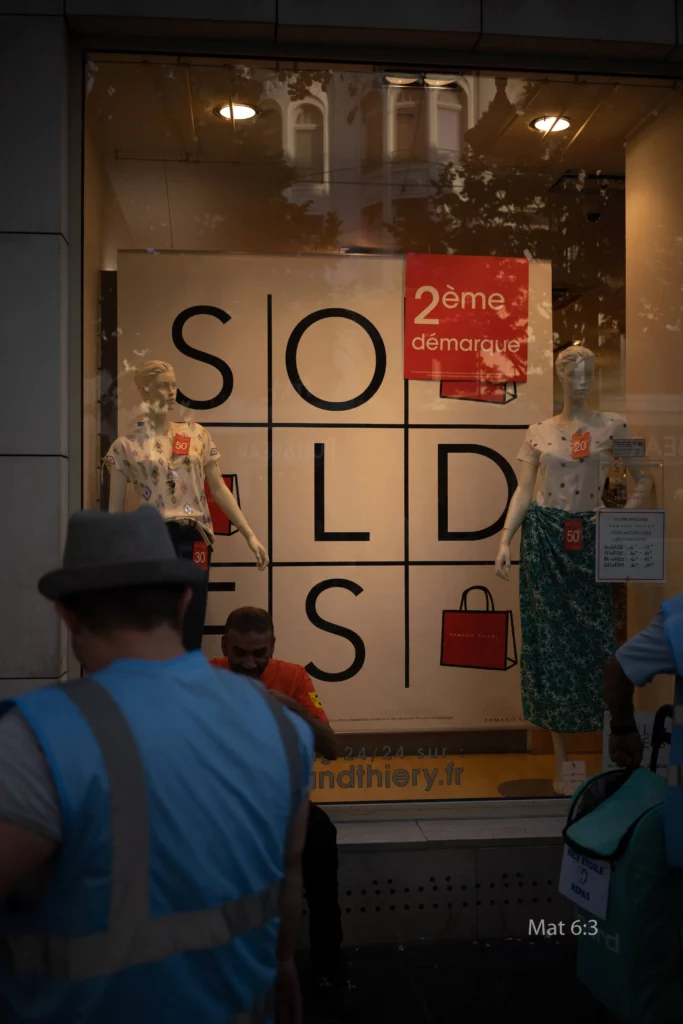
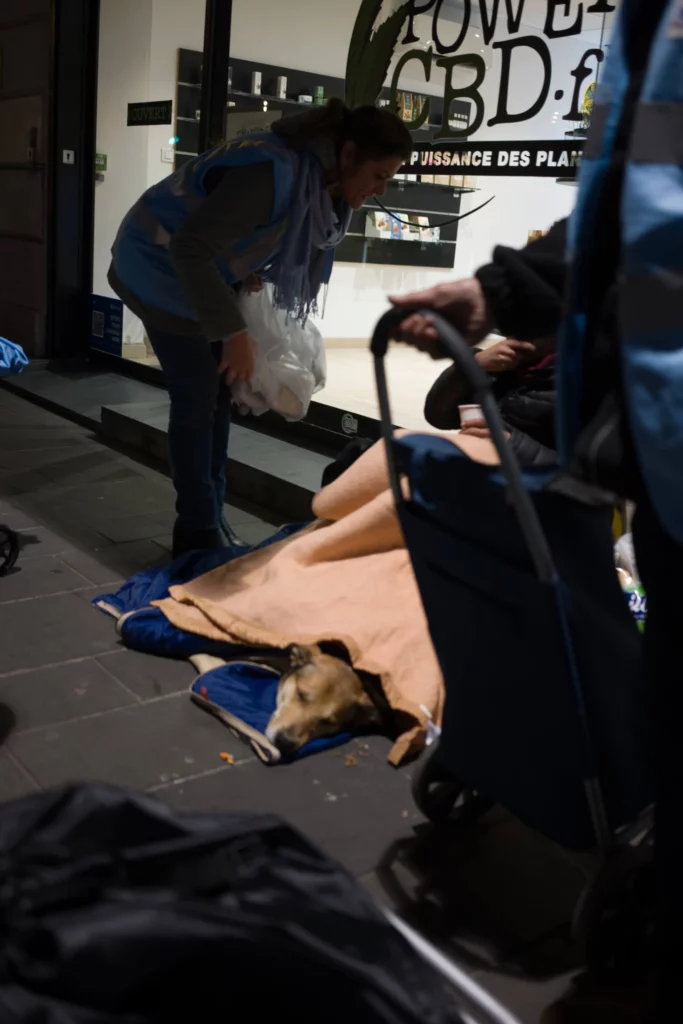
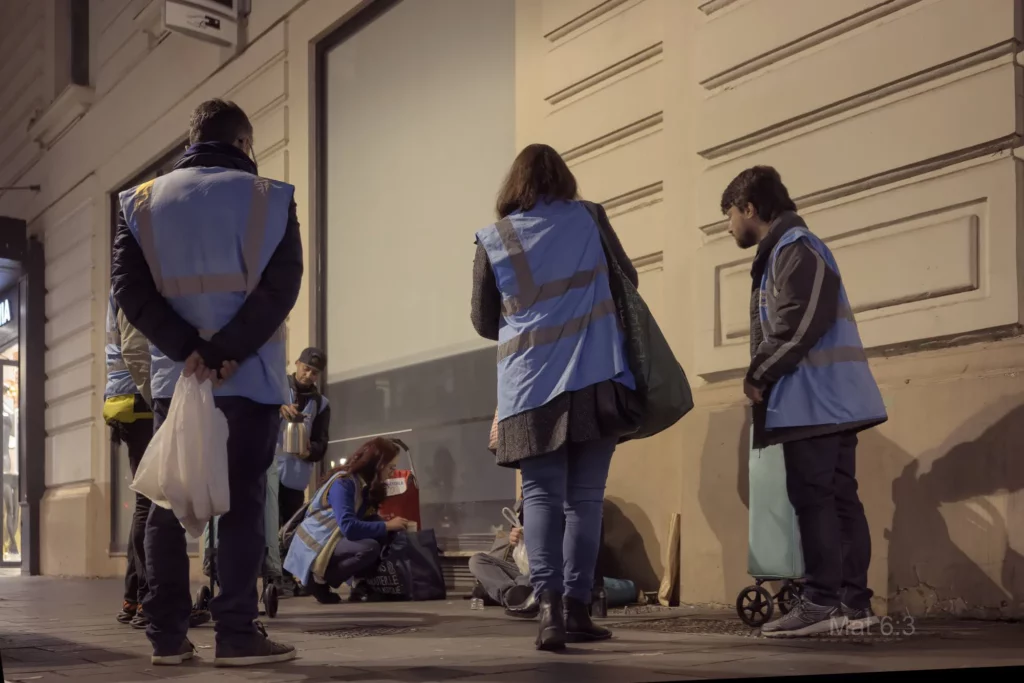
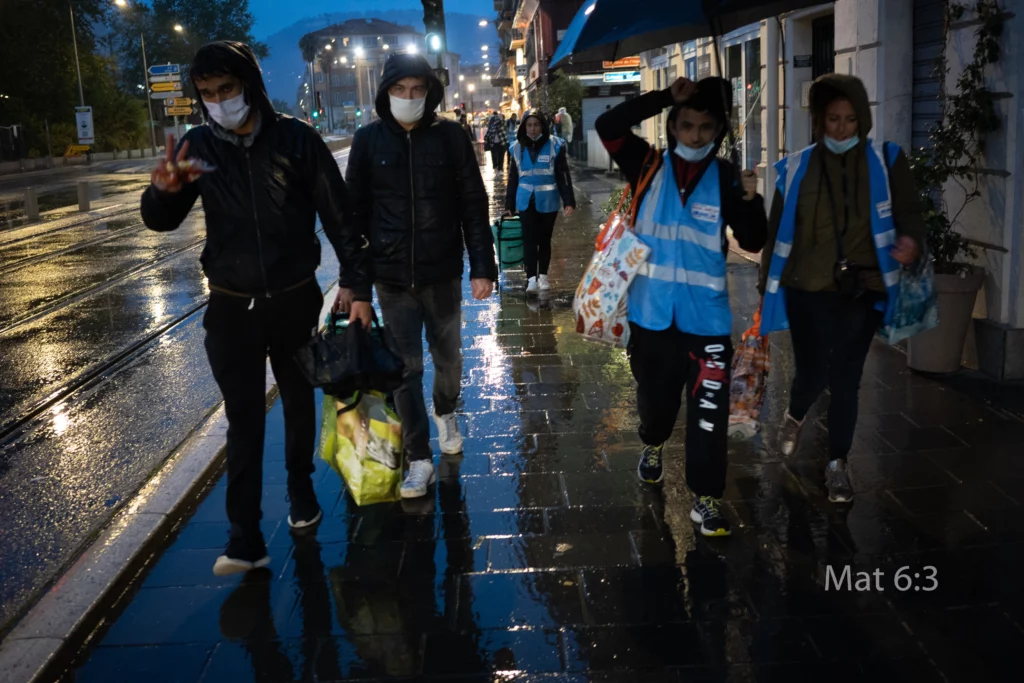
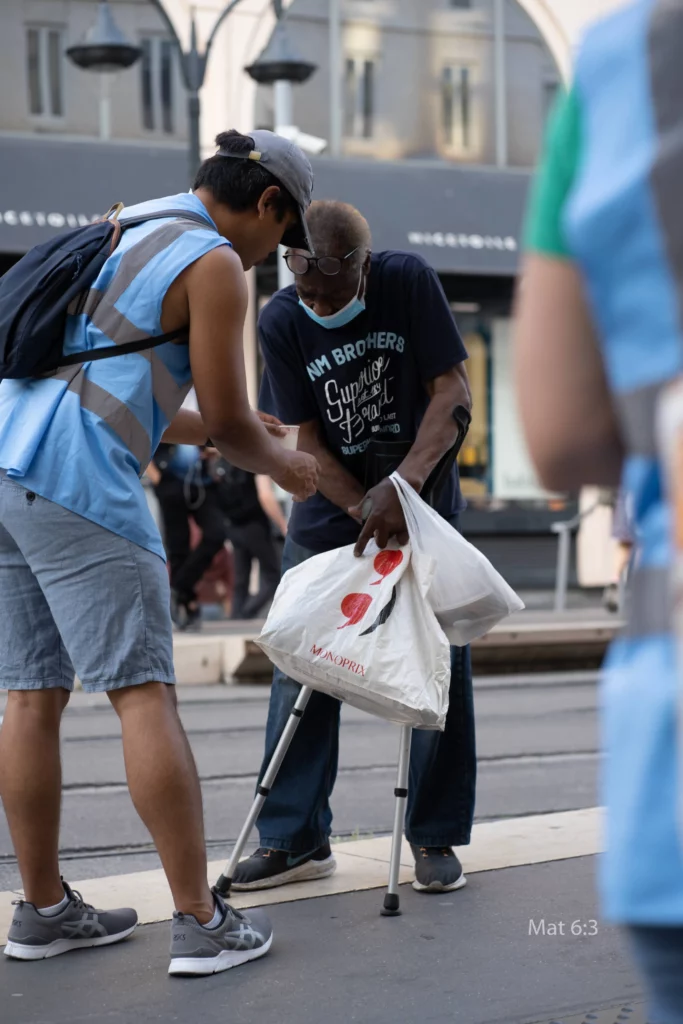
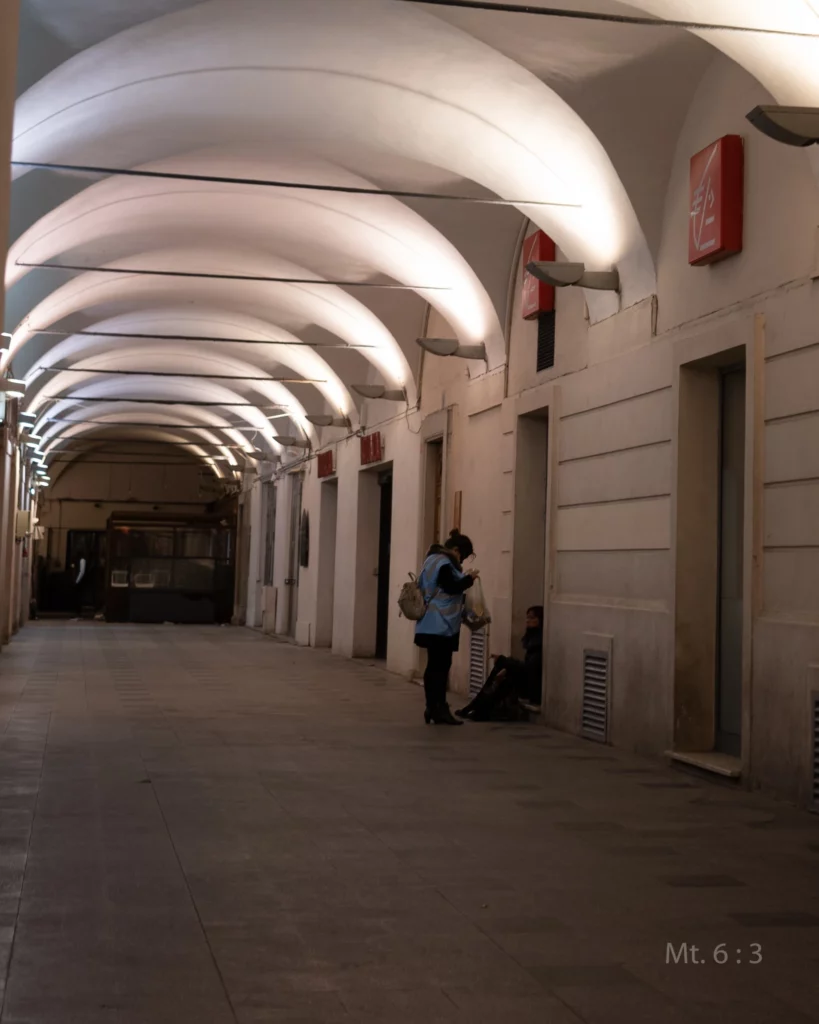
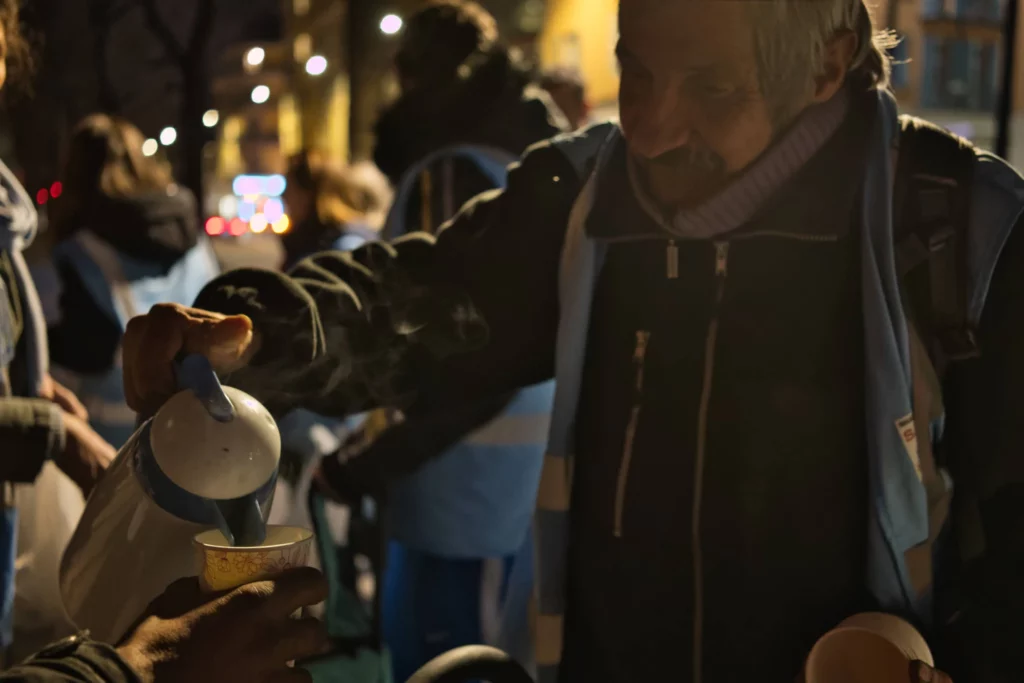
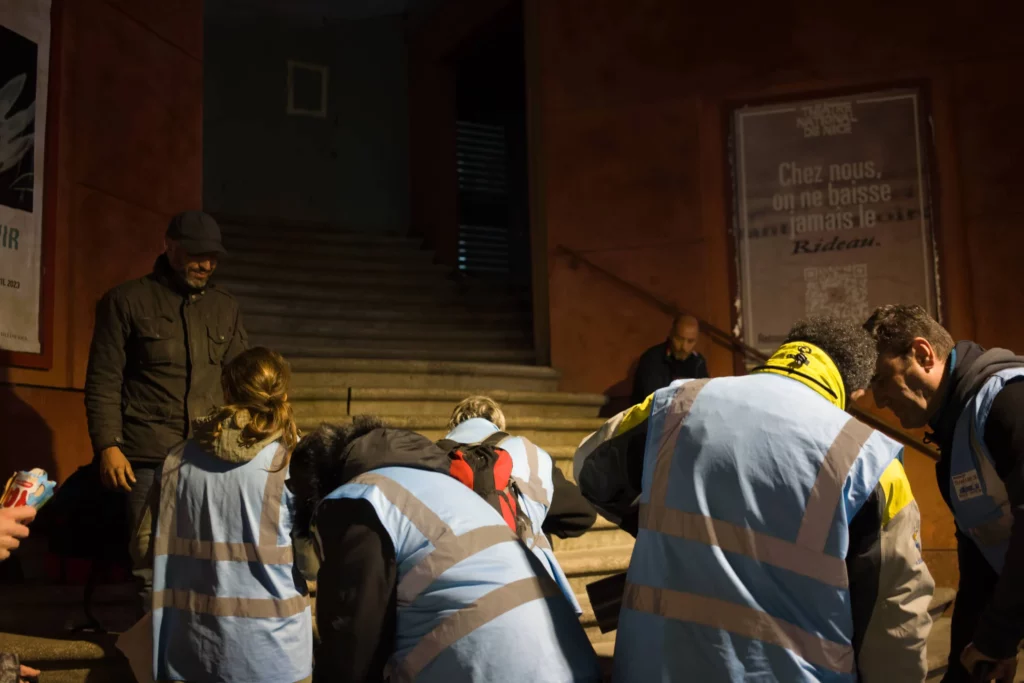
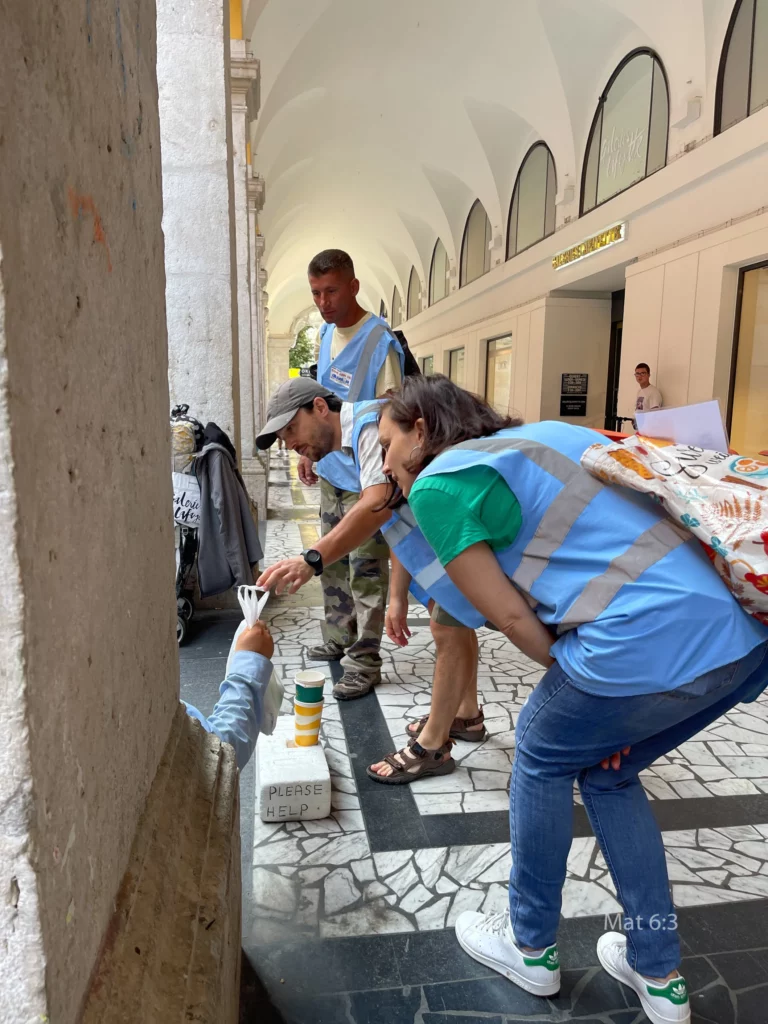
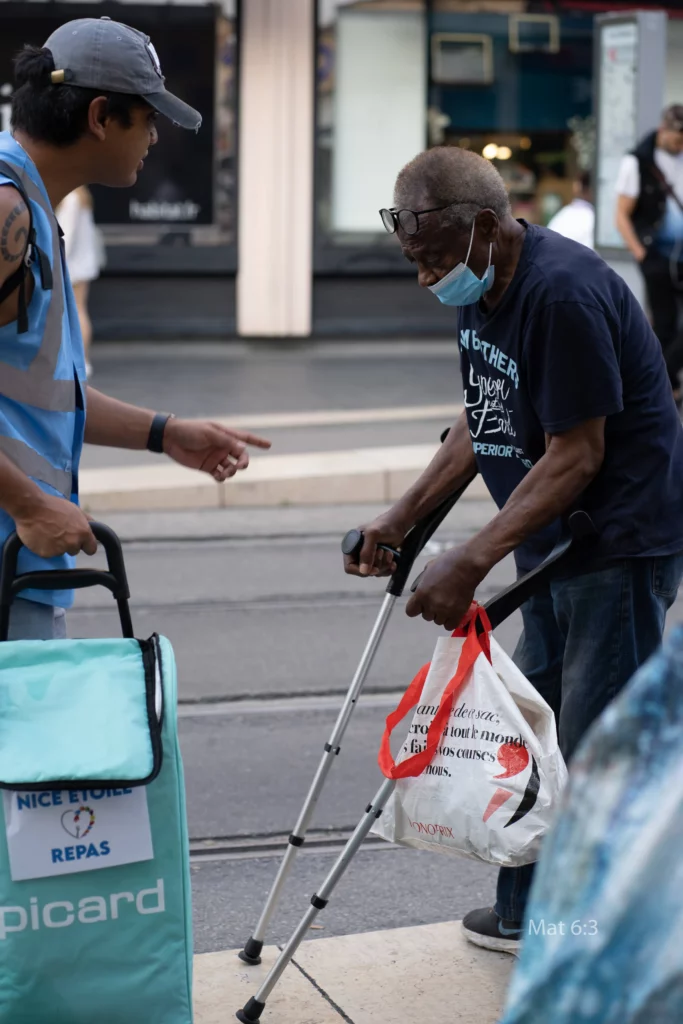
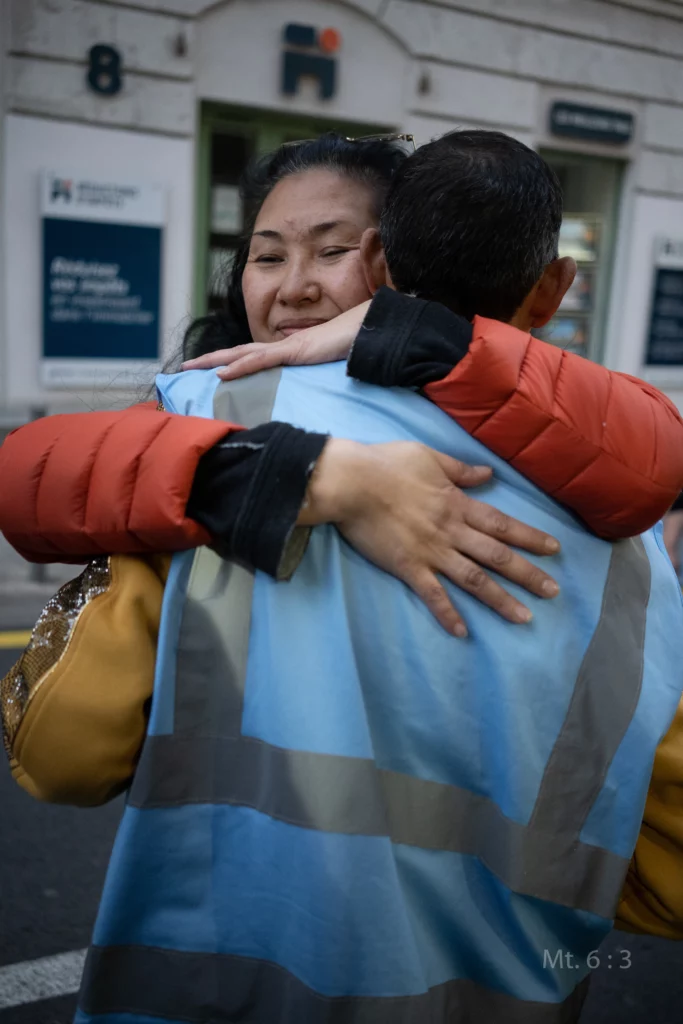
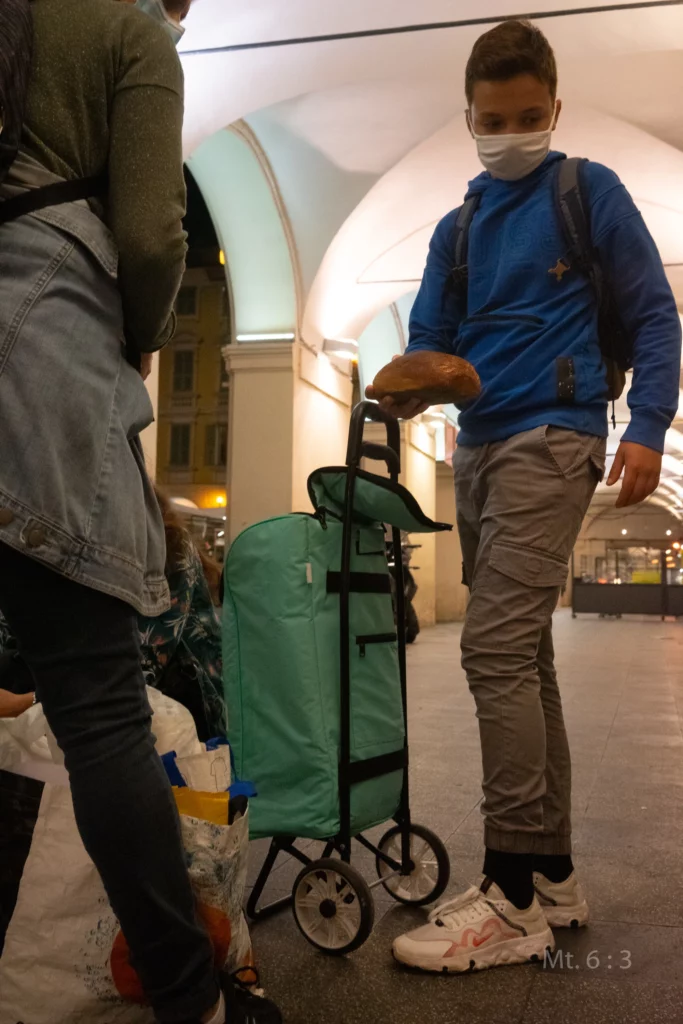
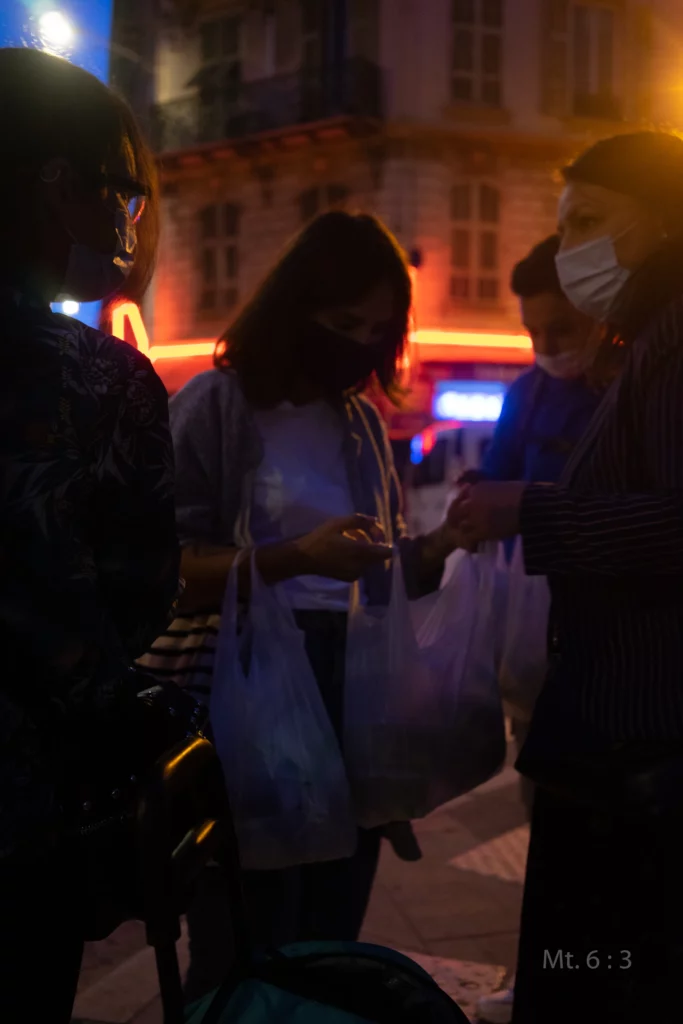
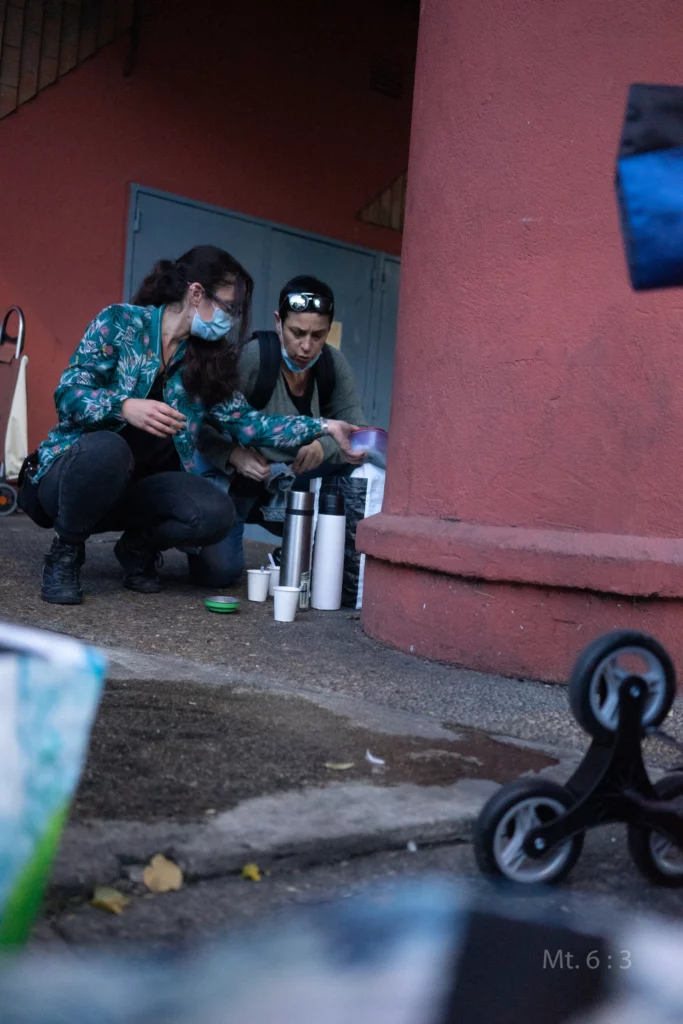
(The images below will present a selection of street photographs made by Pierre-Gérard Martin during urban maraudes. It will be an opportunity to show life in the street without voyeurism, with particular attention to the generosity andHumanity which may be revealed.)
The street photography can be a formidable vector of solidarity andemotion, especially when she is interested in invisibles and moments of sharing. In the photographs of Pierre-Gérard Martin made during maraudes – these volunteer tours with the homeless – we discover scenes of life taken on the alive that reveal a profound humanity. The aim is not to steal images of misery or seek sensational, but rather to highlighting dignity and goodness even in difficult street conditions. A smile exchanged around a hot coffee offered, a hand stretched to help someone get up, a look of gratitude: these moments are captured with delicacy and respect, without staging or intrusion. The photographer strives to apply to the letter the spiritual maxim « Let your left hand ignore what your right hand does » (Matthew 6:2), that is, to give without seeking glory – here, photograph without exploiting the subject. Each picture bears witness to an authentic encounter: a burst of laughter between a volunteer and a street person in a beating rain, the relief legible on a face that receives a cover on a cold night, or the conviviality of a meal shared on the sidewalk between two worlds that meet the space of a moment. The Street is not only a theatre of hardness, it also contains the impulses of heart that photography can reveal, provided that it is practiced with a true sensitivity. These photographs are part of a deeply respectful approach: we will not see impudent close-ups or miserabilism, but rather a pudic celebration of the human solidarity. The use of black and white for some of these images reinforces this impression of timelessness and sobriety, refocusing the look on expressions and gestures. In contemplating this gallery, the reader is invited to feel the human heat which emanates from these street scenes – a heat that contrasts with the coldness of life to the harsh – and to reflect on our gaze towards the other in the public space.
Conclusion: Ethics and emotion at the heart of street photography
In conclusion, to practice street photography is to engage in one approach at a time artistic and Ethics. A good street photographer seeks above all to tell true stories, capture sincere emotions, rather than provoke shock or collect sensational images. The street offers an infinite theatre of moments of life: fleeting joys, social contrasts, lost eyes or shared bursts of laughter. To draw beautiful photographs, it is necessary to talent of course – a sense of composition, timing, light – but above all it is necessary to heart. It is the human look behind the camera that will make all the difference between a common image and a photo that touches the soul. Adopting a respectful attitude is not only a moral obligation vis-à-vis the people photographed, but also a guarantee to create stronger images. When the photographer approaches his subject with empathy and kindness, it appears in the photo itself. Conversely, a photo taken without respect will be seen immediately: as Melissa Breyer said, « the photos say more about the photographer than about the subject » if he lacks empathy.
The respectful street photography is therefore possible and even desirable. It consists of transparent as a mirror, to reflect reality without distorting it, while adding its own sensitivity. It's a photograph. spontaneous, which catches the moment on the alive, but never forgets that there is a human being on the other side of the lens. In France, the legal framework requires thinking about the image of others – a constraint that may seem heavy, but which just reminds us of the importance ofEthics. In a world saturated with images, the street photographer is responsible for not adding to confusion or voyeurism. On the contrary, he can, by his choices, Dignify its subjects, inducingemotion in the audience and perhaps even slightly change our gaze on everyday life.
By defending a humane and honest street photograph, we perpetuate the heritage of Cartier-Bresson, Doisneau and Maier, while adapting to today's realities. So, whether you're an amateur photographer passionate about urban life or simply amateur images, don't hesitate to walk the streets camera in hand. Be curious, patient, quick and respectful – and you will no doubt discover the infinite richness of this open-air theatre which is the street, an inexhaustible source of stories and emotions.
Sources
- Street Photography – Wikipedia (definition and history)
- Nicolas Croce, « Street photography: how to become invisible... » – blog nicolascroce.com (advices of discretion and citation from Sabine Weiss)
- Genaro Bardy, « Street Photography – Get out of your home » (citation by Joel Meyerowitz on unexpected)
- Genaro Bardy, « 5 tips in street photography – Masters of Street Photography » (Interview with Melissa Breyer on empathy)
- Eye in the lens – « 5 things I learned with the street photo » (hyperfocal advice, light travel)
- Vincent Montibus – Interview on thomas-benezeth.fr (telemetry equipment, positive attitude)
- Vivian Maier – Wikipedia (biography, work discovered after his death)
- Henri Cartier-Bresson – Street photography guide (Bruno Tourtoy, 2021) – origin of the « decisive moment »
- Photocorneloup.fr – « Right to street photography image » (law of shooting in France)
- Univ. Lyon 3 – The right to image of persons (cases of recognizable persons, info/art exceptions)
- Legavox.fr – Photography in public places (right to publish a crowd)
- Reddit r/photography – discussion street settings (example ISO auto 1/500s day, 1/125s night)
- Pixabay – Copyright-free image bank (search « people on the street », more than 90,000 free photos)