By using five visuals created in the style of double artistic exhibition, I propose today an article in the section Establishment IA. The objective is not to mystify the technique, but to make you understand all that it involves when it is carried out in a "classical" way... then to show you how artificial intelligence opens up another, different but complementary way.
What is a double exhibition portrait?
Double exposure is a photographic technique that superimposes two images in the same composition. It creates a visual fusion effect: a face and landscape, a silhouette and texture, a clear portrait and a blurred movement.
The rendering is often poetic, introspective, sometimes surreal. But contrary to what one might think, getting this kind of image with a camera is nothing simple.
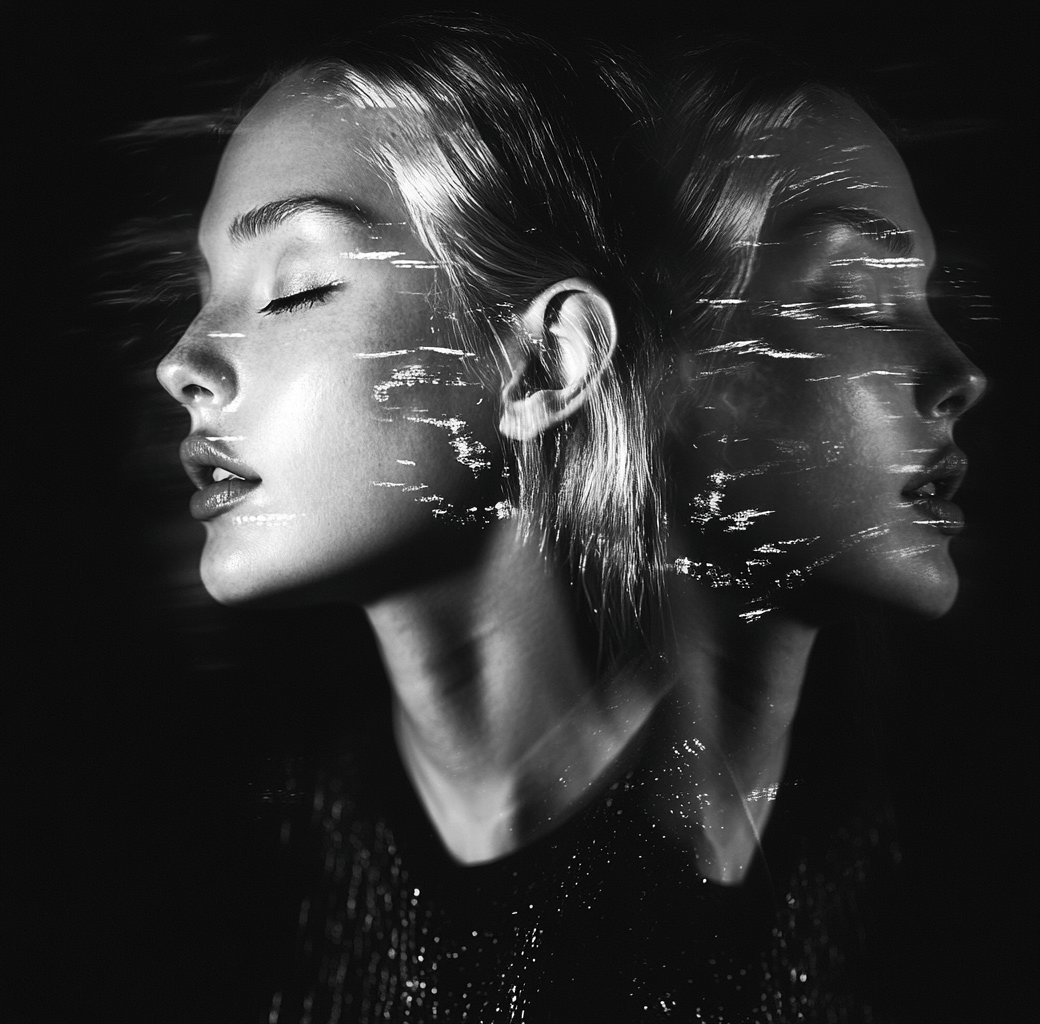
The material needed for a double "real" exhibition
In an attempt to create this type of portrait without any further digital editing, it is necessary to create very precise conditions:
- One photo box able to manage the multi-exposure mode (some SLRs and high-end hybrids offer it, as the Nikon D850 or Canon R6)
- One perfectly stable tripod, because any parasitic movement between the two sockets makes the fusion blurred or misaligned
- One dark or neutral background to detach the elements well
- One precise light management, with lighting sculpting the subject (often a lateral or shaving light)
- One remote trigger, to avoid any tremor at the time of shooting
And of course... time, patience, a good dose of testing, and a real sense of composition.
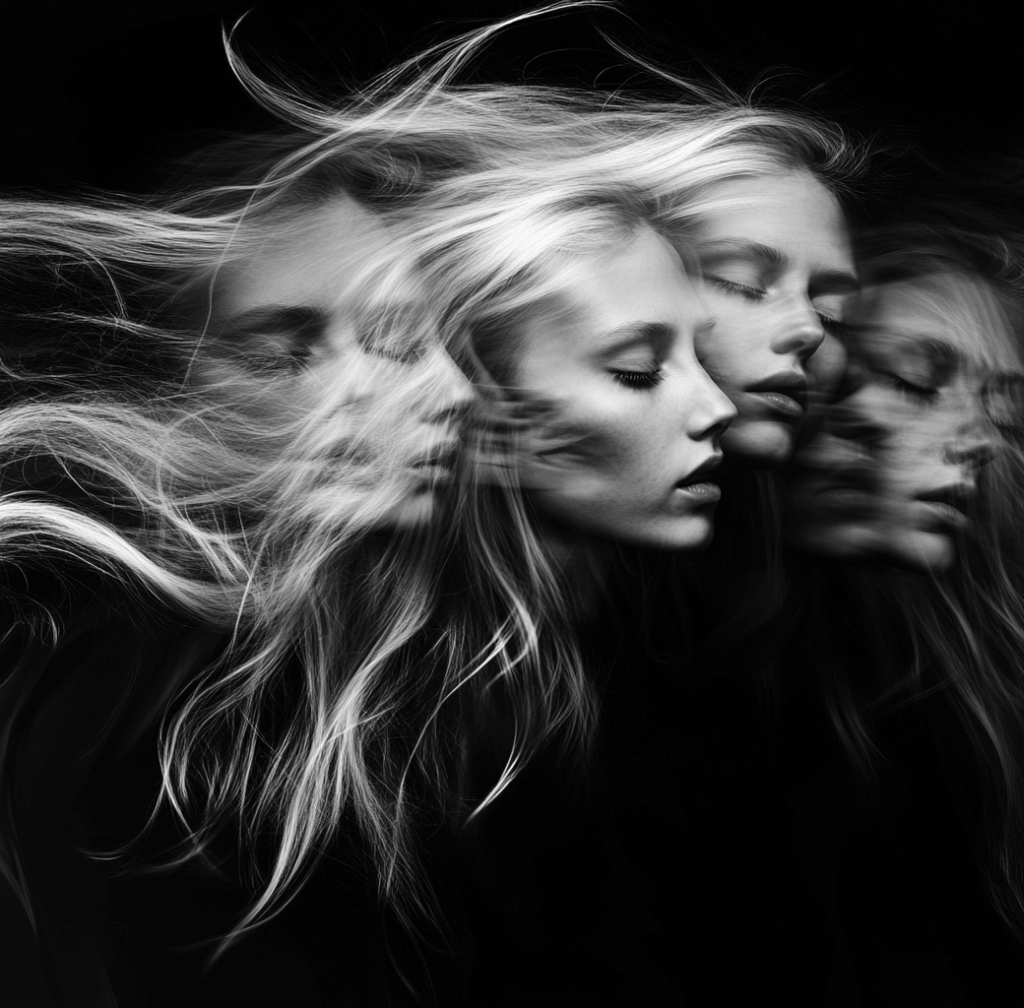
A demanding, unreproducible method
Even with good equipment, success rate remains low. It is not just a question of superimposing two images, but of giving them meaning together: that the forms respond, that the contrasts work, that the gaze remains legible...
In studio, the dual exhibition requires perfect coordination between the photographer, the model and the light. In post-production (e.g. in Photoshop), it requires real know-how to merge layers in a natural way, without it seems artificial.
In short, it is a visual art in its own right.
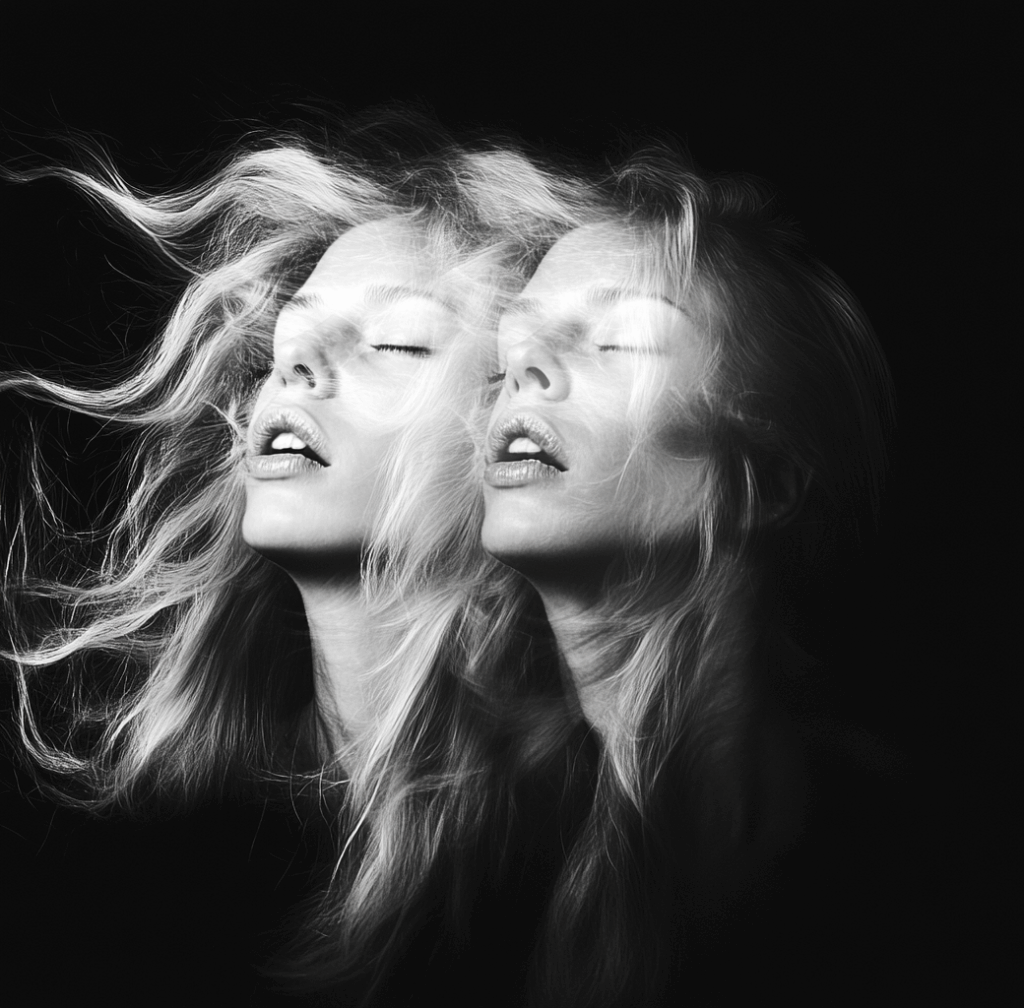
What if artificial intelligence opens a new path?
The five images I present here were not made from a camera. They were created through a process of IA-assisted generation, based on precise photographic and artistic inspirations.
The tool used is able to mimic the effects of double exposure, shades of black and white, gesture, movement, projected light... with an amazing level of consistency.
So of course we won't find emotional vibration a real glance captured at the decisive moment. But when you look objectively at the result, and put it in front of the time, equipment and The question should be asked.
A real debate: what is a "good" image today?
When the visual result is successful, the message passes, that aesthetics is present...
Is it so important to know whether the image was made with a reflex, in studio, or via a generative tool?
The answer is not consensual.
Some will say that there is truth only in real capture.
Others, that a tool is only a tool, and that only intent counts.
Personally, I think one does not prevent the other.
To each bring his own reading.
And if these images inspire you, or question you, I will be happy to discuss them with you, in an artistic, professional or simply curious setting.